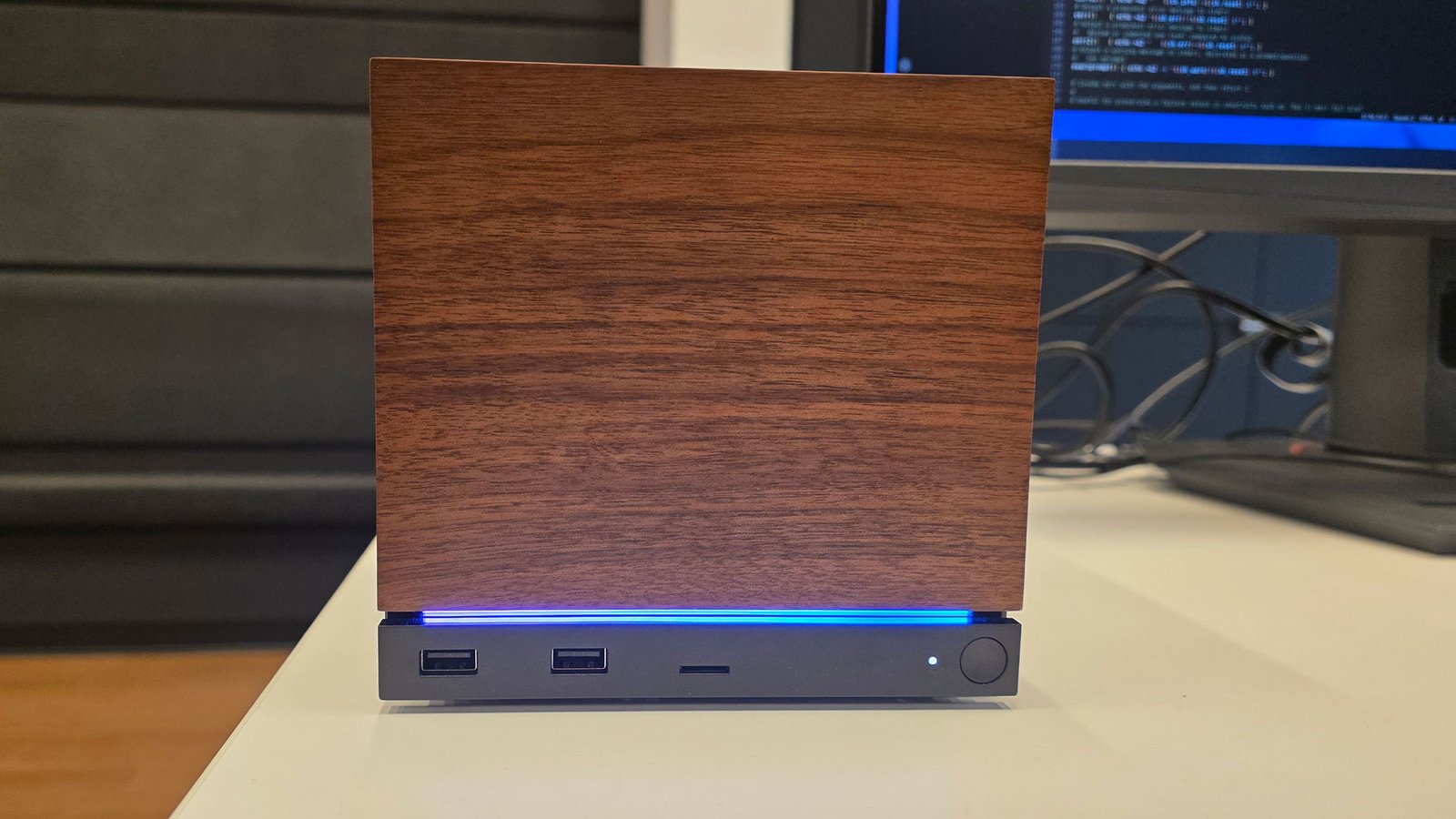
Valve has released the full technical breakdown for the Steam Machine, and this thing is a serious jump over the Steam Deck. Valve themselves have said it delivers around six times the performance of the Deck, which gives you a rough sense of the upgrade without needing any guesswork about frame rates or game-by-game results.
Here are the specs as they stand:
Tech Specs
General
CPU
Semi-custom AMD Zen 4
6 cores / 12 threads
Up to 4.8GHz
30W TDP
GPU
Semi-custom AMD RDNA3
28 CUs
2.45GHz max sustained clock
110W TDP
RAM
16GB DDR5 system memory
8GB GDDR6 VRAM
Power
Internal power supply
110–240V AC
Storage
Two models:
• 512GB NVMe SSD
• 2TB NVMe SSD
Both include a high-speed microSD slot
Connectivity
Wi-Fi
Wi-Fi 6E (2×2)
Bluetooth
Bluetooth 5.3 with dedicated antenna
Steam Controller Support
Integrated 2.4GHz wireless adapter
I/O
Display Outputs
DisplayPort 1.4
• Up to 4K 240Hz or 8K 60Hz
• HDR, FreeSync, daisy-chaining
HDMI 2.0
• Up to 4K 120Hz
• HDR, FreeSync, CEC
USB
Front: Two USB-A 3.2 Gen 1
Back: Two USB-A 2.0
Back: One USB-C 3.2 Gen 2
Networking
Gigabit Ethernet
LED Strip
17 individually addressable RGB LEDs
Size and Weight
Dimensions
152mm tall (148mm without feet)
162.4mm deep
156mm wide
Weight
2.6kg
Software
SteamOS 3 (Arch-based)
KDE Plasma desktop
Where This Sits in the Real World
Valve’s six-times-Deck claim already paints the picture. On paper, the raw numbers place the Steam Machine slightly under a PS5, but the updated architecture and fixed hardware profile should put it closer than people expect in actual use. That’s without making any promises or trying to call performance before review units land.
Once hardware is in the wild, we’ll look at the real stuff that matters:
• how AAA ports behave
• how far it can push 1440p and 4K
• thermals
• noise
• Deck vs Machine comparisons for older games
• TV play and SteamOS improvements
But for now, these are the specs, clean and simple.